


How Dubai is Building the Next Global Tech Hub
A data-driven look at how strategic policy, global capital, and sector-focused innovation turned Dubai into one of the world's fastest-growing venture ecosystems.
metaprop.
BLOG
Inside the ideas shaping
tomorrow's built world
tomorrow's built world
The MetaProp Blog offers in-depth perspectives on the technologies transforming how we finance, insure, design, manage, measure, build, and power the world.
How Dubai is Building the Next Global Tech Hub
In the past decade, Dubai has rewritten what it means to be a startup ecosystem in the 21st century. This Emirate has undergone numerous transformations over the past century - each time, reinventing itself with evermore ambition. Few realize that Dubai's economic history lies in pearling and fishing. In the 1940s and 50s, it reinvented itself as a more modern port city, primarily dealing in the facilitation of the gold trade.
Also unbeknownst to most is the fact that Dubai does not have the oil reserves of its neighbouring Emirate, Abu Dhabi. It used the limited natural resources at its disposal to generate export revenue and diversify its economy, first into a logistics and international trade hub (1970s to 1990s), then into a tourism, real estate, and finance hub (1990s to 2010s).
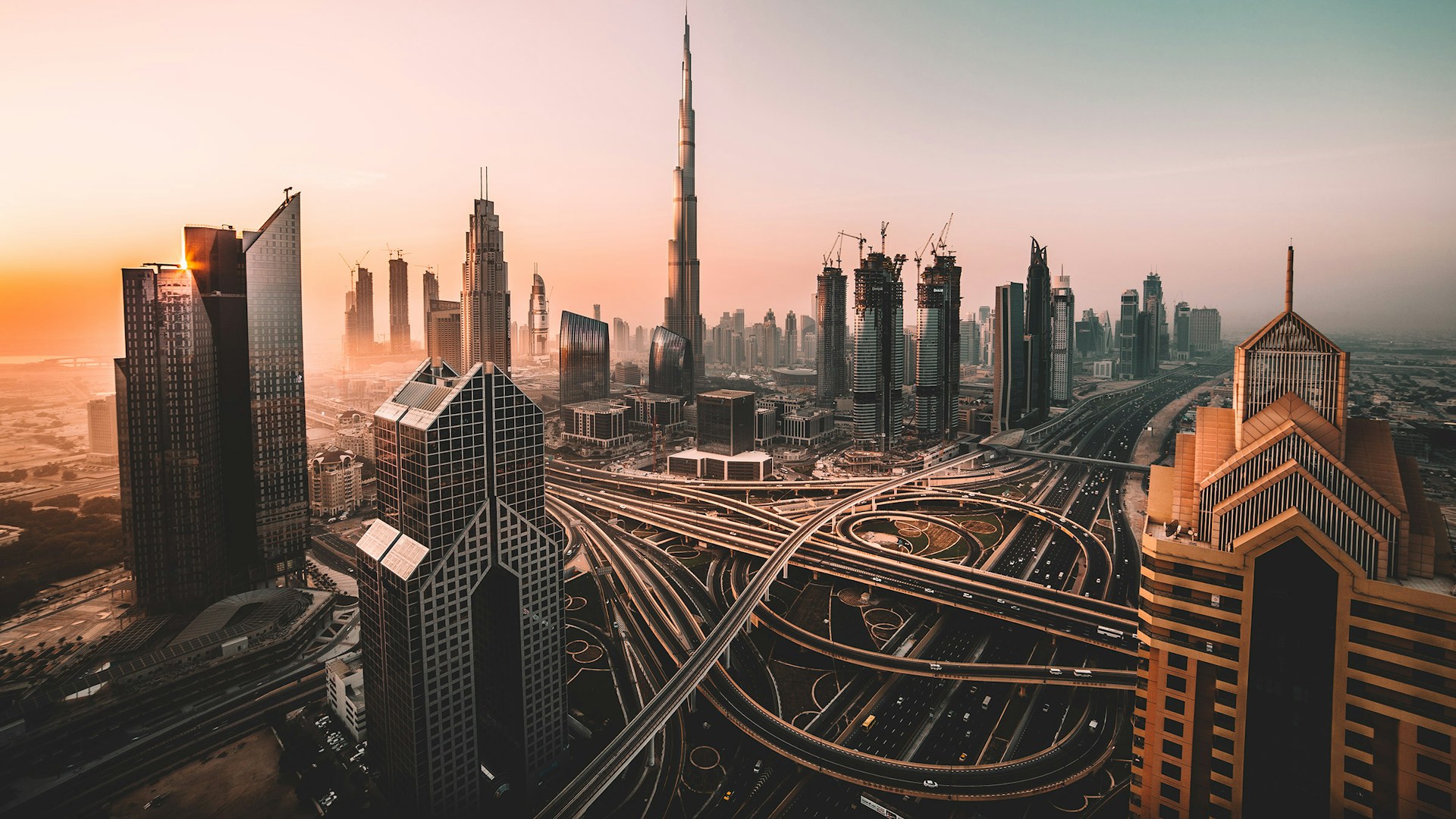
Today, it is one of the world's fastest-growing hubs for venture capital and technology innovation — particularly in sectors like FinTech, PropTech, digital infrastructure, and related verticals such as InsurTech and construction technology. The Emirate's extraordinary transformation didn't happen overnight. It was strategic, policy-driven, and globally minded. Building relationships with global partners, simplifying immigration for top talent, creating world class infrastructure, and curating economic free zones were all part of its carefully curated and deliberately thought out repertoire of incentive programs.
Today's capital flows, venture success stories, and future forecasts point to a city that's no longer just building glitzy skyscrapers and artificial archipelagos — this city has doubled down on building the future of finance, property, trade, and digital infrastructure. Central to this transformation is not only the entrepreneurial spirit of the city but also strategic public-private catalysts like the Dubai Future District Fund (DFDF). By the end of 2024, DFDF had supported over 190 startups and helped mobilize more than $1.65 billion in capital commitments through direct investments and fund of funds initiatives.
The Capital Surge
In early 2025, UAE-based tech startups raised $872 million in Q1 alone, a staggering 194% increase quarter-on-quarter and 865% above Q1 2024 totals — underscoring the surge of investor confidence and deal-size scale-ups in the region. Dubai companies accounted for 96% of all UAE tech funding during this period.
VC Funding Growth in UAE (2018–2025)
2018
2019
2020
2021
2022
2023
2024
2025
Source: Tracxn 2025 UAE Funding Report - first 9 months of a given fiscal year (Tracxn, 2025)
These trends showcase what had been a historically modest startup scene across the UAE into what is now a regional capital magnet for venture growth and technological development.
1. FinTech: Outpacing Expectations
FinTech remains one of the most dynamic subsectors in the regional startup economy. In H1 2025 alone, FinTech startups across the UAE pulled in $265.8M in funding across 35 deals (Wamda, 2025), up over 130% year-on-year and contributing to more than 60% capital deployed — a signal that financial services innovation is now entering its maturity and growth chapter.
Startups like Alaan, a spend-management and corporate finance platform, have capitalized on that confidence. In 2025, Alaan secured a $48M Series A led by global venture firm Peak XV Partners, marking one of the region's largest early-stage fintech deals. Other regional FinTech champions such as Tabby, MENA's premier buy now, pay later solution, Erad (YC S22), a non-dilutive B2B revenue-based financing provider, Lean, an open banking infrastructure platform, CredibleX, an embedded lending platform for SMBs, Lune, a transaction data enrichment software, and Sarwa, a WealthTech managing over $800M in AUM, are all breaking strides and accelerating the sector's staggering success. Each of these has not only gained the trust of renowned institutional investors but has also seen wide adoption and growth at breakneck speed.
This infusion isn't just numbers — it speaks to global capital finding relevance in this region's unique market dynamics: a young, digital-native population, strong regulatory support from fintech sandboxes such as DIFC's DFSA and ADGM's RegLab, and rising demand for alternatives to traditional banking.
Featured FinTech Companies
Tabby
Alaan
Erad
Lean
CredibleX
Lune
Sarwa
2. Real Estate & PropTech: Digitizing the Built World
Dubai's iconic skyline has long been a symbol of engineering prowess and ambition signalling — but today, the story is about technology shaping the economics, accessibility, and asset management of real estate itself. PropTech stands second, behind only FinTech and ahead of InsurTech, SaaS, eCommerce, and DeepTech, as the sector which recorded the most venture capital funding deals in 2025 (Wamda, 2025).
One of the standout success stories is Property Finder, a real estate asset marketplace now valued at over $2 billion since it recently secured a significant minority investment from global private equity firms (e.g., Blackstone and Permira). While figures vary across reports, this type of deal signals scale deals and serious valuation growth for proptech companies born in Dubai. (Note: sourced by multiple investor-coverage outlets).
A broader wave of PropTech innovation — from valuation engines to rental marketplaces — now complements these later-stage capital events. Beyond marketplace platforms, projects like tokenized real estate investment (e.g., fractional ownership of high-value assets such as units in iconic developments) are making Dubai a test bed for blockchain-enabled property finance solutions, once again supported by strong public-private sector initiatives such as those sponsored by Dubai Land Department.
As in FinTech, local champions such as Stake, a fractionalized real estate investment app, Keyper, a rent now, pay later and property management solution, Huspy, a home-buying and mortgage simplification platform, and Letswork, the region's ClassPass for co-working spaces, have become the service provider of choice for consumers and institutional customers alike. By reimagining user experiences, redefining accessibility, and generating tangible impact across the value chain, they propel the ecosystem to new heights, inspiring evermore founders and stakeholders to contribute.
Featured PropTech Companies
Property Finder
Stake
Keyper
Huspy
Letswork
In the construction tech space, Dubai's smart city initiatives and digital twin strategies have catalyzed startups focused on AI-powered project delivery, real-time scheduling tools, and IoT-based asset optimization systems — although most are yet to reach unicorn scale as they are still in early-stage development or growth phases of their fledgling journeys. Tenderd, OpTeam, and Navatech AI, among others are notable ones to watch.
Construction Tech Companies to Watch
Tenderd
OpTeam
Navatech AI
3. Insurance & InsurTech: Risk Redefined
While InsurTech in Dubai remains embryonic compared to fintech or proptech, it's rapidly emerging as a sector ripe for innovation. In H1 2025, UAE startups collectively raised $55 million in InsurTech funding (Wamda, 2025), marking meaningful early-stage traction within a traditionally slow-moving industry.
Local founders emphasize the market gap in transparent risk pricing and digital policy distribution, which Dubai's regulatory ecosystem seems keen to test through sandbox programs and digital licensing models. A wave of ventures from Hala Insurance to Souqalmal to YallaCompare pioneered the first wave of InsurTechs in the late 2010s. Structural, technology, and unit economics constraints hindered the sector from further progress at the time. With the advent of new and more affordable tech capabilities, a resurgence is bound to ensue.
Why Dubai Now
Dubai's rise did not occur in a vacuum. A unique blend of pro-innovation policy, world-class infrastructure, tax incentives, talent attraction, and global access has created a fertile ground for innovation development and venture investment. Regulatory sandboxes, a low tax burden, and full foreign entity ownership are just part of the equation; the rest is cultural momentum and relentless drive — this Emirate is a melting pot where ideas scale rapidly and capital can chase opportunity with confidence.
Looking Ahead: What 2026 Holds
With continued emphasis on sustainable finance, talent development, and cross-border capital connections, Dubai — with DFDF at its strategic core — is positioned to be not just a regional powerhouse, but a global destination for future-defining companies. Furthermore, a well connected, deeply committed, and resource-equipped roster of venture capital firms such as Beco Capital, Wamda, Global Ventures, MEVP, and Shorooq Partners serve as a foundational layer for new institutional capital partners to catapult the regional innovation ecosystem to the stratosphere.
Key Regional VC Partners
Beco Capital
Wamda
Global Ventures
MEVP
Shorooq Partners
In 2026, with the advent of technological development in AI, hardware, and software integration alike, we are poised to see the boundaries between venture development sectors start to blend. Robotics-enabled construction tools, Wearable- and insight-enabled insurance, AI-powered efficient energy and water management, agentic finance and credit flow facilitation, mobile clean power sources, automated logistics ports, and more blended tech is set to materialize. Dubai knows that it is well positioned to be at the forefront of the next wave of built environment innovation. Therefore, there is no better time to establish partnerships with local champions and capitalize on this monumental opportunity.
Innovation leaders continue to stress that collaboration, not isolation, will define the next decade. As DFDF expands its partnerships and capital reach, the boundary between local relevance and global impact shrinks - in fact, it already is.