


Behind the Build: Caren Maio on Rental Fraud & 100
Caren Maio is on her second act. A conversation about 100, fraud prevention, and building fast in residential real estate.

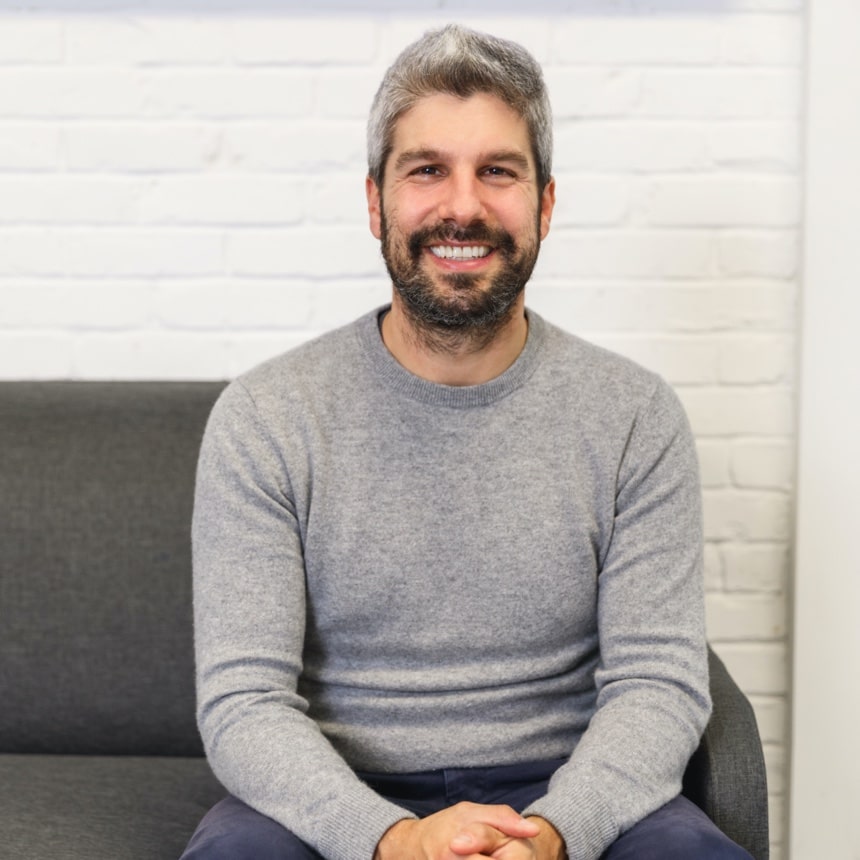
Most founders get one shot at building something the market remembers. Caren Maio is on her second. The first time, she spent more than a decade pulling a stubborn industry into the modern era with leasing platform Funnel (formerly Nestio). This time, the same kind of traction is arriving in a fraction of the time: in roughly 18 months, 100 has acquired a strategic company, sustained north of 25% month-over-month revenue growth, and been named the preferred fraud-prevention partner for several of the largest residential operators in the country.
Caren has been part of the MetaProp family for years, first as a mentor in our earliest accelerator classes and now as the founder of one of the fastest-growing companies in our portfolio. We sat down with her to talk about how she got here, what 100 actually is, and why this is its moment.

Founder Spotlight
Caren Maio, Founder & CEO, 100
Zach Aarons (MetaProp): We are thrilled to welcome Caren Maio to this edition of our portfolio founder spotlight series. Caren, you have been building in and around this world long before it was a headline. A lot of people in real estate and tech think of you as one of the OGs of this sector. Before we get into 100, take me back to the beginning. How did you get here?
Caren Maio (100): I got into real estate the way a lot of people can relate to, which is by being a frustrated renter. Before any of this I was in ad sales at the Wall Street Journal. I'm an NYU kid, I'd bounced around something like eight apartments in New York, and every single search was miserable.
So my co-founders and I started a company in 2011 to fix it. We called it Nestio then. Most people know it today as Funnel Leasing. It began as basically a Pinterest for apartment hunting, but when users kept telling us the listings were wrong or already gone, I went and shadowed the brokers and landlords to find out why. The back end was held together with tape: manual spreadsheets, systems that didn't talk to each other, the same listing updated by hand in ten places. That was the lightbulb. The consumer pain was just a symptom. The real problem lived in the operators' systems, so we pivoted into software for them, and that became my entry into building for this industry.
I've been at the intersection of real estate and technology ever since. By the time the industry needed 100, this was not a new world I was wandering into. I didn't parachute into rental fraud because it was hot. I feel like I've been earning the right to build this for fifteen years.
Zach: So let's talk about 100. For someone meeting the company for the first time, what is it, what led you to start it, and what are you focused on right now?
Caren: At the simplest level, 100 is the modern, end-to-end platform multifamily operators use to take both fraud and friction out of renting. We confirm that an applicant is who they say they are, biometrically, and that their income, employment, credit, and rental history are real, and we do it in minutes instead of days. It's screening and servicing in one place, so the same system that stops a bad actor also speeds a good one through.
One piece I'm especially excited about is the Verified Renter Network. Think of it as a TSA PreCheck for renters. A renter verifies once, to a high standard, and then carries that trusted status with them, so qualified applicants breeze through and operators can lease with confidence. We built it on CLEAR's identity technology, the same infrastructure millions of people already use to move through airports.
As for why 100 started, it began the way the first company did, with listening. Before 100 was anything, we did a road show and asked operators one question: what is the single biggest thing you're trying to solve right now? The answer kept coming back the same. Fraud and bad debt. So we were like, okay, check the box. This is not a problem we have to convince anyone exists. They're already bleeding from it. What we're focused on now is making that verified trust the default in how people rent, the way it became the default in how people fly or pay.
Zach: Speed feels like a big part of 100’s story so far. In just 18 months, you’ve built something that took the better part of a decade to achieve at your first company. What did building Funnel teach you that made this kind of pace possible?
Caren: What made it possible was everything we got wrong, or got slowly, the first time around.
The lesson that took me longest to learn is that you cannot will a market into being ready. You can have the best product in the world and still be early. Funnel was a real success, but a lot of that came from years of evangelizing the market, getting operators to want something better before they were even asking for it. That work pays off, but it is slow. With 100, I wasn't interested in being early. I was interested in being right on time. The road show told me the market was already there, in pain, asking for this. So instead of spending years convincing people the problem mattered, we got to spend that energy building the answer. That's the whole difference.
Zach: Fraud has always existed in renting. Why is this the moment it became a business worth building?
Caren: Fraud isn't new. What's new is the scale and the sophistication.
For most of this industry's history, fraud prevention has been more art than science. A leasing agent gets a bad feeling about a pay stub, squints at it, maybe catches it, usually doesn't. The numbers are brutal. The FBI tracked $275 million in real estate fraud losses last year. Around 93% of NMHC members got hit in the past year, and more than 70% of operators don't catch it until after the resident has moved in, which is the worst possible time, because by then you're in an eviction that costs thousands.
What tipped it from chronic to acute is AI. The same tools making our lives easier make it trivially cheap to manufacture a convincing fake identity or a flawless fake pay stub. Deloitte projects AI-driven fraud losses will hit $40 billion by 2027. You can't solve a modern problem like that with yesterday's toolkit. The people committing fraud got a serious upgrade, and the defenses mostly hadn't. That's why 100 had to exist now, not five years ago.
Zach: A big part of this announcement is acquiring Cobblestone, a team out of the early engineering ranks at Ramp. An 18-month-old company making an acquisition is aggressive. Why buy instead of build?
Caren: Because I have zero ego about where great technology comes from. The companies that try to be all things to all people, building every piece themselves out of pride, tend to do a lot of things adequately and nothing exceptionally.
Cobblestone was founded by engineers who helped build some of the most advanced underwriting systems in fintech, at one of the fastest-growing startups in the country. They brought a rigor to income and identity verification that real estate has never had access to. And what I keep coming back to is that fintech already solved a version of this, aviation already solved a version of this. If you're safe enough to fly, you're safe enough to rent an apartment. It was only a matter of time before that rigor reached multifamily, and we didn't want to wait. The Cobblestone acquisition means fintech-grade underwriting now sits directly inside our platform. I don't say that as a press-release line. I mean it as a real, durable edge.
Zach: People hear "AI fraud detection" and picture one algorithm spitting out a yes or no. That's not what you built, and it's clearly working. Walk me through both.
Caren: The single-algorithm version is exactly what fails, because one tool making one call is a single point of failure, and a sophisticated fraudster only has to fool it once. So what we built looks at an applicant from many angles at once and then argues with itself: data orchestrated across multiple signals, a chorus of models that cross-check each other, and humans in the loop to catch the case that slips through on a technicality. On its own, each of those has a blind spot. Run them together and they cover for each other.
And it proves the thing I most want this industry to believe, that trust and speed aren't a tradeoff. Asset Living saw roughly $4.3 million in NOI impact from bad actors and fraudsters stopped early and often. RAM Partners saw a 35% reduction in delinquency in 100 days. Knightvest saw a 67% lift in leasing velocity, which is qualified speed. Across our customers we drove more than $27 million in savings in Q1 alone, and project that number to rise to well over $100 million by year-end. The deepest point is the network: fraud is coordinated, the bad actors share what works and move from one operator to the next, so every operator fighting solo is a gap in the system. The more operators who join, the smarter we collectively get, and the fewer places there are to hide.
Zach: Last one. You've done this before, so you know how hard the middle gets. What's different the second time, and where does 100 go from here?
Caren: The second time, you've got scar tissue, and it turns out to be useful. A lot of blood, sweat, and tears went into the first company, and I wouldn't trade any of it, because it's the reason I can see this one clearly. I'm more level now. I know which fires are real and which ones just feel real at 11pm, and I'm a lot more comfortable saying no: this customer isn't the fit, this feature isn't the focus. You don't really learn that kind of focus until being unfocused has cost you something.
Where it goes is trust infrastructure for the entire rental process. The vision is that verified trust becomes something a renter carries everywhere. A verified renter glides through, a fraudster hits a wall, and the operator never has to choose between filling a unit fast and filling it safely. Today that's a competitive advantage for the operators who adopt it early. I believe it becomes table stakes tomorrow. The day is coming when applying to rent without verified trust will feel as strange as showing up to the airport with no ID. We're just building the standard before everyone realizes they already needed it.