


When We Start Building Hotels in Space
The record SpaceX IPO put a public-market price on getting to orbit. For built-world investors, the returns are in the stack underneath, not the grand opening.
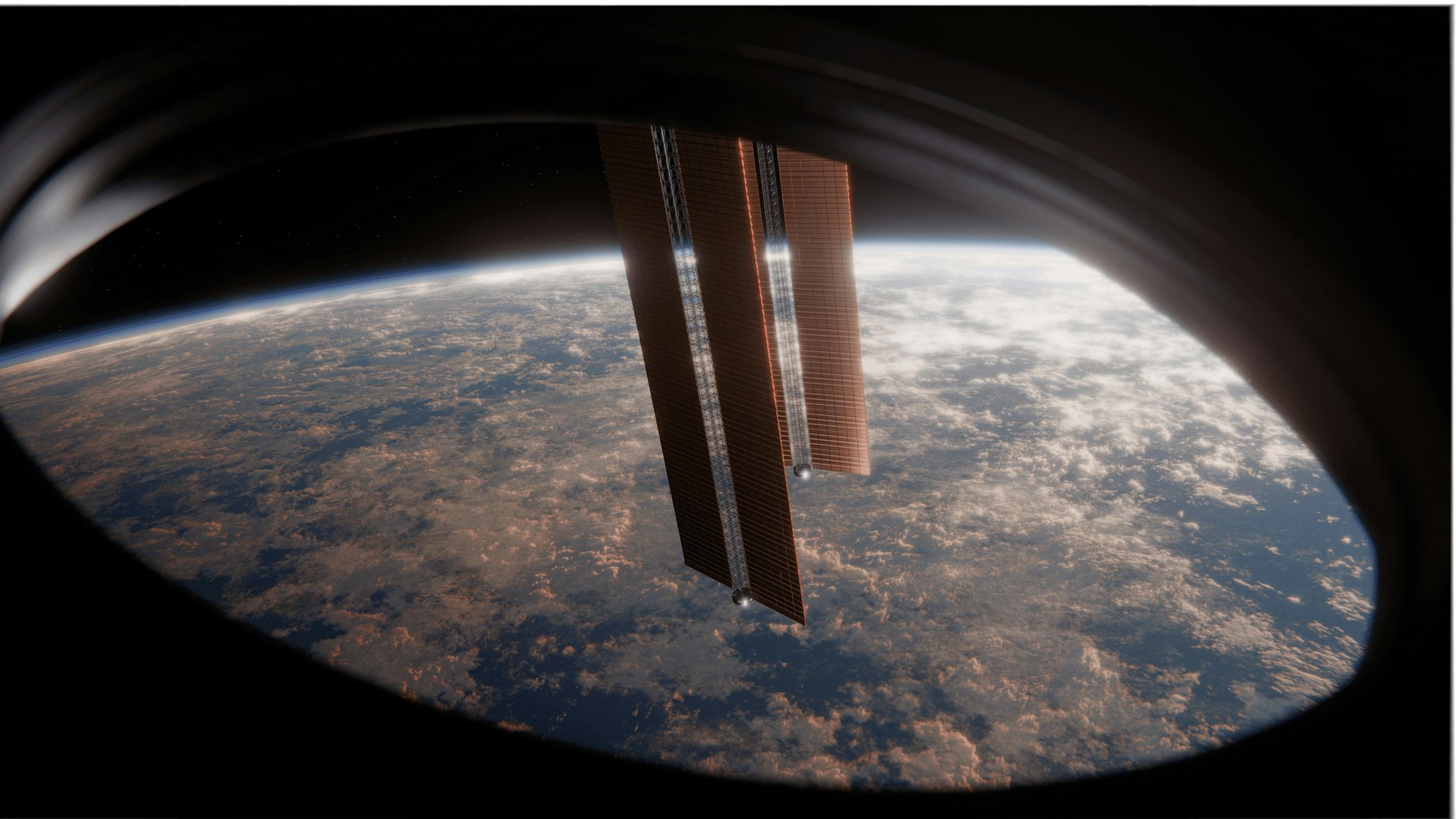

In 1968, Stanley Kubrick sent a Pan Am shuttle up to a rotating space station and parked a Hilton inside it. 2001: A Space Odyssey treated orbital hospitality as a solved problem, set dressing for a story about something else entirely. Fifty-eight years later the Pan Am shuttle is long gone, but Hilton is back, and this time the rooms are real. The chain is designing crew quarters for the Starlab commercial station. The renderings are gorgeous. The timelines are almost certainly optimistic. And for the first time, the economics underneath them are starting to make sense.
I spend my days investing in the intelligence layer for real assets, which is to say buildings, land, and the systems that run them. So when SpaceX went public on June 12, I paid closer attention than a real estate investor probably should. SPCX priced at $135, opened on the Nasdaq, and within days was trading near $161, pushing the company past a $2 trillion valuation. It is the largest IPO in history, more than triple the previous record. Public capital markets just underwrote the cost of moving mass to orbit, cheaply and repeatedly, at the scale of the seventh-largest company in America.
$135 fixed IPO price, trading near $161 within days
$2T+ valuation, the largest IPO in history, roughly $75B raised
~30% reserved for retail, so the public could own a piece
$2T+ valuation, the largest IPO in history, roughly $75B raised
~30% reserved for retail, so the public could own a piece
Space hotels have always been a transportation problem wearing a hospitality costume.
The day the launch layer becomes a fundable, public, reusable utility is the day the rest of the stack becomes investable. Not soon. But investable.
Everyone wants to talk about the grand opening. The ribbon-cutting on the first orbital suite will be a magazine cover. It will also be one of the worst venture entry points imaginable: peak hype, brutal capital intensity, a fifteen-year payback, and a single point of failure called keeping the guests alive. The returns are not at the front desk. They sit deeper in the stack, in transportation logistics, construction systems, energy, life support, autonomy, and the software that ties it all together.
Mapping the Space Hospitality Stack
Layer 1: Transportation
The most mature layer, and the one the SpaceX IPO just repriced. Starship carries north of 100 tons to low Earth orbit on a fully reusable architecture. Blue Origin's Blue Moon Mk2, selected for Artemis V, can put up to 20 metric tons on the lunar surface. Intuitive Machines (Nasdaq: LUNR) handles precision landing and data relay after completing the first American commercial lunar landing in 2024. The open lane is the adjacent software: scheduling, logistics optimization, and cargo management for what will become regular Earth-to-Moon supply runs.
Layer 2: Construction and Materials
My highest-conviction near-term layer. Lifting construction material from Earth to the lunar surface runs roughly $50,000 to $150,000 per kilogram, which makes building with what is already up there an economic necessity rather than a science project. ICON, the Austin company that has printed close to 200 structures on Earth, holds a NASA contract for lunar construction systems. GRU Space, a Y Combinator company, is working on geopolymer bricks made from lunar regolith, and is the same outfit taking million-dollar deposits on a 2032 lunar hotel. In-situ construction has obvious dual-use demand, from military installations to Mars habitats to remote terrestrial building, and that demand de-risks the bet.
Layer 3: Energy Infrastructure
The Moon runs on a brutal clock: 14 Earth-days of sunlight, then 14 days of dark. The answer is hybrid: solar plus compact nuclear plus serious storage. In January 2026, NASA and the Department of Energy signed an agreement targeting a lunar surface reactor by 2030. Compact nuclear and advanced storage built for space spill straight back into terrestrial energy. This one sits squarely in the FIRE economy we already invest behind.
Layer 4: Life Support Systems
Closed-loop environmental control that recycles water at 98 percent or better is non-negotiable. The ISS recently demonstrated 98 percent water recovery, and that system cost roughly $150M to develop for six people. Scaling it to 30 or 50 guests is a genuinely hard engineering problem, and no company commercially owns it yet. Whoever builds scalable, commercial life support has the cleanest moat in the entire stack, because the product is "nobody dies." This is the most important and most underinvested layer on the page.
Layer 5: Autonomous Operations and Robotics
The labor math in orbit is unforgiving, so automation is not optional. NASA's Astrobee robots already run autonomous inventory and cargo handling, and the opportunity lives in the gap between "demonstrated on the ISS" and "deployable at hotel scale." Build the commercial version and you earn recurring revenue from every operator, while the same autonomy cascades directly into terrestrial building management, a market we know well.
Layer 6: Guest Experience and Hospitality Operations
The headline signal is Hilton committing real design resources to Starlab, the first major hotel brand to do so. Too early for a pure-play bet unless your fund has a fifteen-year-plus horizon. The nearer-term version is the infrastructure of the guest experience: food technology, health monitoring, and the booking and operations software any of these stations will need long before the first paying guest arrives.
The Competitive Landscape
Here is where the money has actually gone. Funding figures are comprehensive across disclosed rounds, verified as of March 2026.
| Company | Focus | Total Funding | Target | Status |
|---|---|---|---|---|
| Axiom Space | Station | ~$830M+ equity | Module: early 2027 | Payload module in fabrication in Turin; $350M round Feb 2026; 5 missions flown |
| Vast Space | Station | $1B+ total | Haven-1: 2027 | Haven Demo launched Nov 2025; $500M closed Mar 2026; NASA partner award |
| ICON | Construction | ~$507M | Active NASA contract | ~200 printed structures; NASA lunar contract; cut 25% of staff Jan 2025 |
| GRU Space | Hotel | YC + undisclosed | Hotel: 2032 | YC W2026; $250K to $1M deposits; SpaceX and Anduril alumni |
| Starlab | Station | NASA CLD + consortium | Launch: 2029 | Voyager + Hilton + Airbus + Northrop Grumman + Palantir; CDR cleared 2026 |
| Blue Origin + Sierra | Orbital Reef | Self-funded; Sierra $2B+ | ~2030 | Sierra closed $550M Series C Mar 2026; consortium incl. Boeing, Amazon |
| Interlune | ISRU / He-3 | ~$23M+ | 2027 prospecting | DOE He-3 purchase agreement; ex-Blue Origin founders + Harrison Schmitt |
| Astrolab | Rover / logistics | $160M+ contracts | 2026 to 2028 | FLEX rover; NASA LTV contract; SpaceX lunar delivery agreement |
Sequencing the Opportunity
Now
2026-2028
Construction technology, life support, and autonomous operations. Dual-use demand, real government contract revenue today, and relevance regardless of which operator ultimately wins.
Medium term
2028-2033
Energy infrastructure, lunar logistics and supply chain, and food technology. These need the transportation layer to keep maturing, but Artemis and the first commercial stations will generate clear demand signals.
Long term
2033+
Full-stack operators, luxury experience brands, and the franchise and licensing models that the Hilton and Starlab partnership is quietly foreshadowing.
The Built World Does Not End at the Atmosphere
Here is the part the billionaire's-plaything crowd misses. Closed-loop water recycling, autonomous building management, 3D printing from local materials, compact nuclear: these are not space toys. They are answers to urgent, expensive, terrestrial problems in construction, energy, and building operations. The Moon is just the hardest possible test environment for the things we already need to fix on the ground.
The SpaceX IPO did not make space hotels real. It made the supply chain underneath them fundable, public, and priced. That is the part that matters. The built world does not end at the atmosphere, and neither does the opportunity.
If you are a founder building anywhere in this stack, construction, energy, life support, autonomy, or the software layer that runs it, my DMs are open.