



Jubilee separates the home from the land beneath it. It buys the land, sells the house, and leases the ground to the homeowner through a recorded long-term lease. Down payments can begin at 2% and ground-rent increases are capped at 3% annually. In markets where land represents a large share of a home’s value, this can lower the capital required to become a homeowner. It also involves a clear tradeoff: the buyer exchanges future land appreciation for a lower barrier to entry. That tradeoff should be understood plainly.
A Venture Perspective on the Housing Affordability Crisis
Housing supply is essential. But for households already under pressure, affordability is also shaped by the costs and payment terms wrapped around the home. Technology can improve both.

Most serious housing conversations arrive at the same conclusion: America needs to build more homes. That is right. Zoning reform, faster permitting, and lower construction costs are necessary to make housing more attainable over time.
But those changes take years to affect the homes available to households today. In the meantime, affordability is determined each month, when rent, mortgage, insurance, energy, and other costs come due.
As of 2024, a record 22.7 million renter households spent more than 30% of their income on housing, including 12.1 million spending more than half. Cost burdens rose in 88 of the 100 largest metropolitan areas between 2019 and 2024. Household formation fell to roughly 1.1 million in 2025, while existing-home sales remained near three-decade lows.
For these households, the immediate question is not whether supply reform will matter. It will. The question is how to make the monthly payment more manageable while that longer-term work takes effect.
Rent, the mortgage, the insurance premium, and the utility bill arrive on a fixed schedule, whether or not a household’s income does. Supply reform can lower prices over time. The bills keep their own calendar.
Inside a monthly housing payment
Set at signing
Mortgage or rent
The largest component, and the one most housing policy is aimed at. Rents reset at renewal and buyers today lock in at today’s rates, both of which have moved sharply. Once a fixed-rate loan closes, principal and interest then stay flat for its life.
Rising
Home insurance
+46%
Since 2021, about three times the rate of inflation over the same period.
Rising
Utilities and energy
+32%
Residential electricity since 2021, with sharper increases in several states.
Rising
Property taxes
Higher
Up in much of the country, reassessed on a schedule the household does not set.
Variable
Maintenance
Uneven
Recurring upkeep, arriving whether or not a given month has room for it.
Sources: Insurify, Insuring the American Homeowner 2026; US Energy Information Administration.
A Fixed Rate Does Not Fix the Whole Payment
The 30-year fixed-rate mortgage has long been one of the most important protections in household finance. It provides certainty around principal and interest. It does not, however, fix the other costs of owning a home, and those costs have risen quickly.
Home insurance premiums have increased roughly 46% since 2021, about three times the rate of inflation over the same period. Residential electricity prices are up about 32%. Property taxes have also risen in much of the country. Together, utilities, maintenance, renovations, taxes, and insurance now account for roughly $23,686 a year for the average homeowner, close to the size of the mortgage payment itself.
The fixed-rate loan is still doing exactly what it promises. The limitation is simply that it protects one part of a larger household budget.
Annual cost of owning a home in the United States, 2026
MortgageMedian$25,380
Principal and interest, median-priced existing single-family home.
Everything elseAverage$23,686
Utilities, maintenance, renovations, property taxes, and insurance.
Sources: mortgage figure from the National Association of Realtors Housing Affordability Index, April 2026, median-priced existing single-family home with 20% down; non-mortgage figure from the Clever Real Estate homeowner cost survey, March 2026, a survey of 1,000 homeowners.
Nearly three in ten homeowners said they would drop insurance entirely if they could. A household prepared to go uninsured is signaling a stretched balance sheet, and that strain eventually reaches the lender as well.
Electricity warrants particular attention. Residential rates rose 7.4% year over year in February and 6.2% in May. The increases were sharper in Virginia, Ohio, and Pennsylvania, where data-center development is a meaningful contributor to demand growth. Housing policy does not determine those rates, but they are still part of what a home costs each month.
The Affordability Stack
Decompose a monthly housing payment and you get four layers.
The affordability stack
01CapitalWhat you bring to the table. Down payment, collateral, liquidity at closing.
02CreditWhat it costs to borrow the rest. Interest rate, origination and lender fees.
03OperatingWhat the home costs to run. Property insurance, heating, cooling and power.
04TimingWhen the money leaves the account. Due date versus payday, late fees and delinquency.
Capital and credit are where most housing-policy attention goes, for good reason. Down-payment assistance, first-time-buyer programs, interest rates, and housing supply all affect what households can afford to buy or rent.
But operating costs and payment timing matter as well. Insurance, energy, taxes, and maintenance can change the cost of staying in a home after the transaction closes. A payment schedule that does not match income can turn a manageable expense into late fees, delinquency, and damaged credit.
That is why we increasingly view affordability through the broader FIRE economy: financial services, insurance, real estate, and energy. The asset matters, but so do the contracts and recurring costs surrounding it.
Layer by Layer
These are examples from our own portfolio of what building at each layer looks like.
01 · Capital
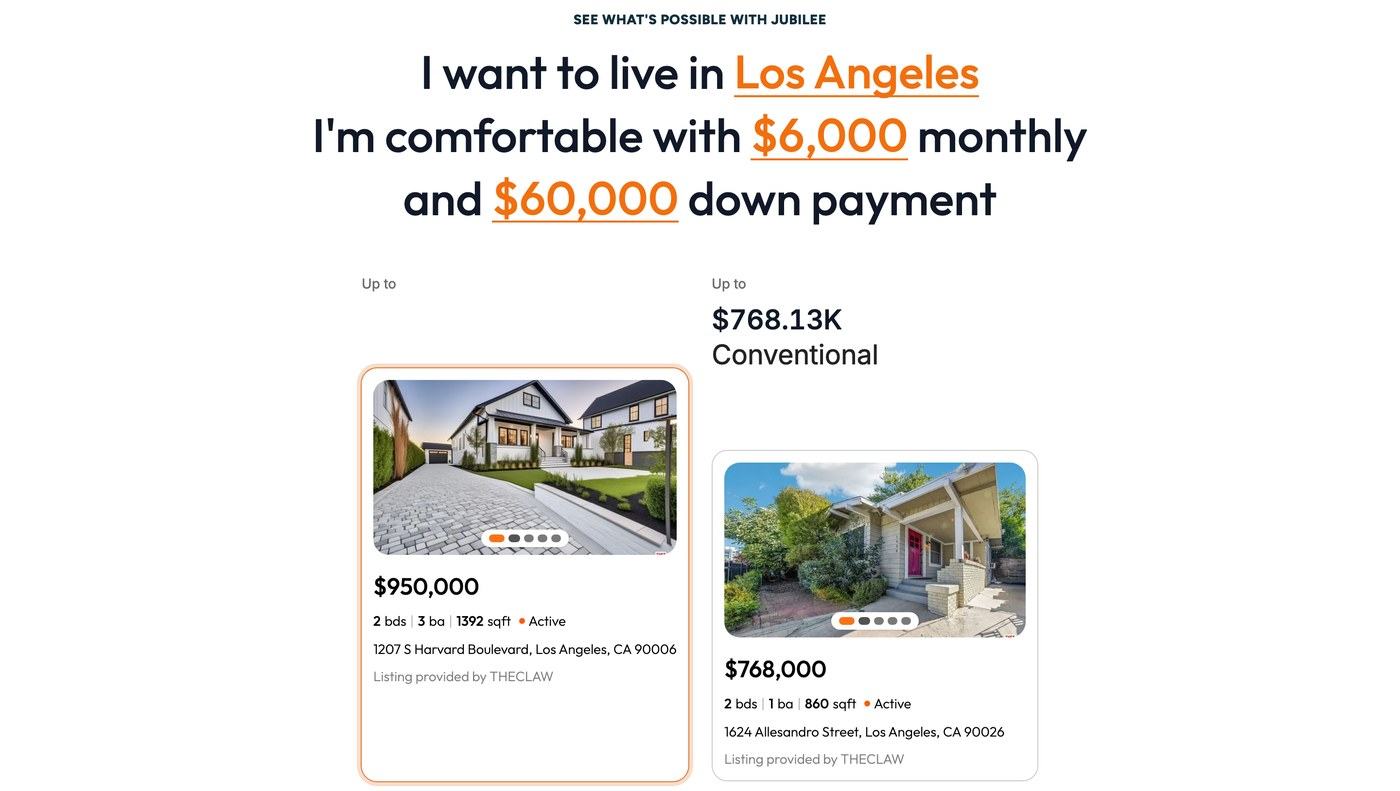 JubileeBuys the land, sells the house, leases the ground on a recorded long-term lease.Down payments from 2%; ground-rent increases capped at 3% a year.
 MiloLends against Bitcoin and Ether so qualified buyers can borrow without selling.Down-payment liquidity without a taxable event.
Milo addresses a different form of the same capital constraint. It lends against Bitcoin and Ether, allowing qualified buyers to borrow without liquidating assets and triggering a taxable event. Its customer is not the same as Jubilee’s, and this is not a universal affordability solution. The broader lesson is that a down payment can be a liquidity constraint even for households with assets. Better ways to underwrite illiquid assets may broaden the options available to some buyers.
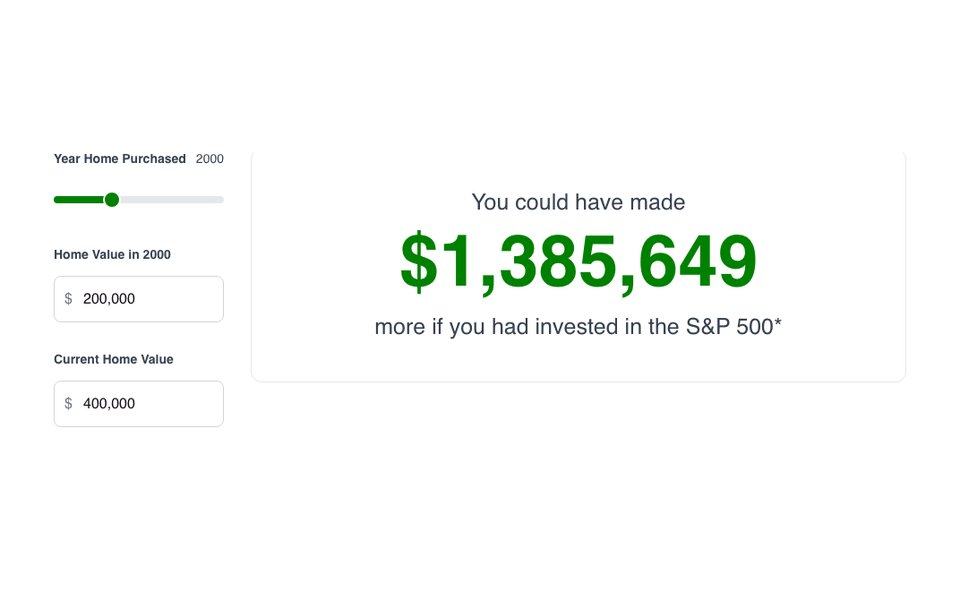 WealthieMoves a portion of home equity into diversified assets.Diversification without new debt.
Wealthie, from the 2025 MetaProp Accelerator at Columbia University, addresses the concentration of wealth in home equity. It enables homeowners to move a portion of that equity into diversified assets without taking on new debt. For many middle-income households, the home is their largest asset, but it is illiquid, concentrated in one market, and difficult to put to work. That does not make homeownership a mistake. It does create a financial constraint worth solving carefully.
02 · Credit
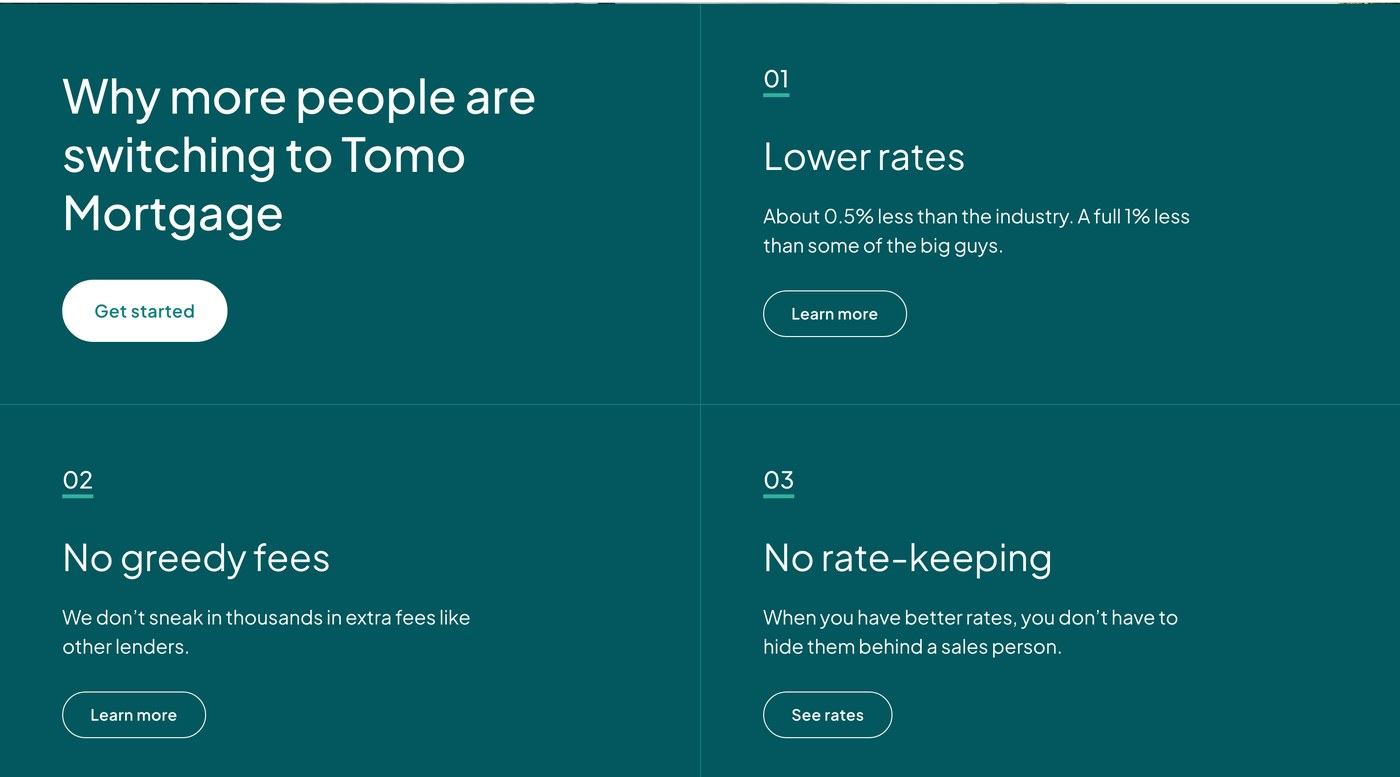 TomoMortgages without loan-officer commissions or lender fees.About $1,340 in annual savings for the average borrower.
Tomo has built its mortgage model without loan-officer commissions or lender fees, and it says it can save the average borrower about $1,340 annually. The underwriting technology is part of the story, but the compensation model is equally important: the company has removed a structure that can reward originators when borrowers pay more. That is a practical example of using company design, not just interface design, to change the cost of credit.
03 · Operating
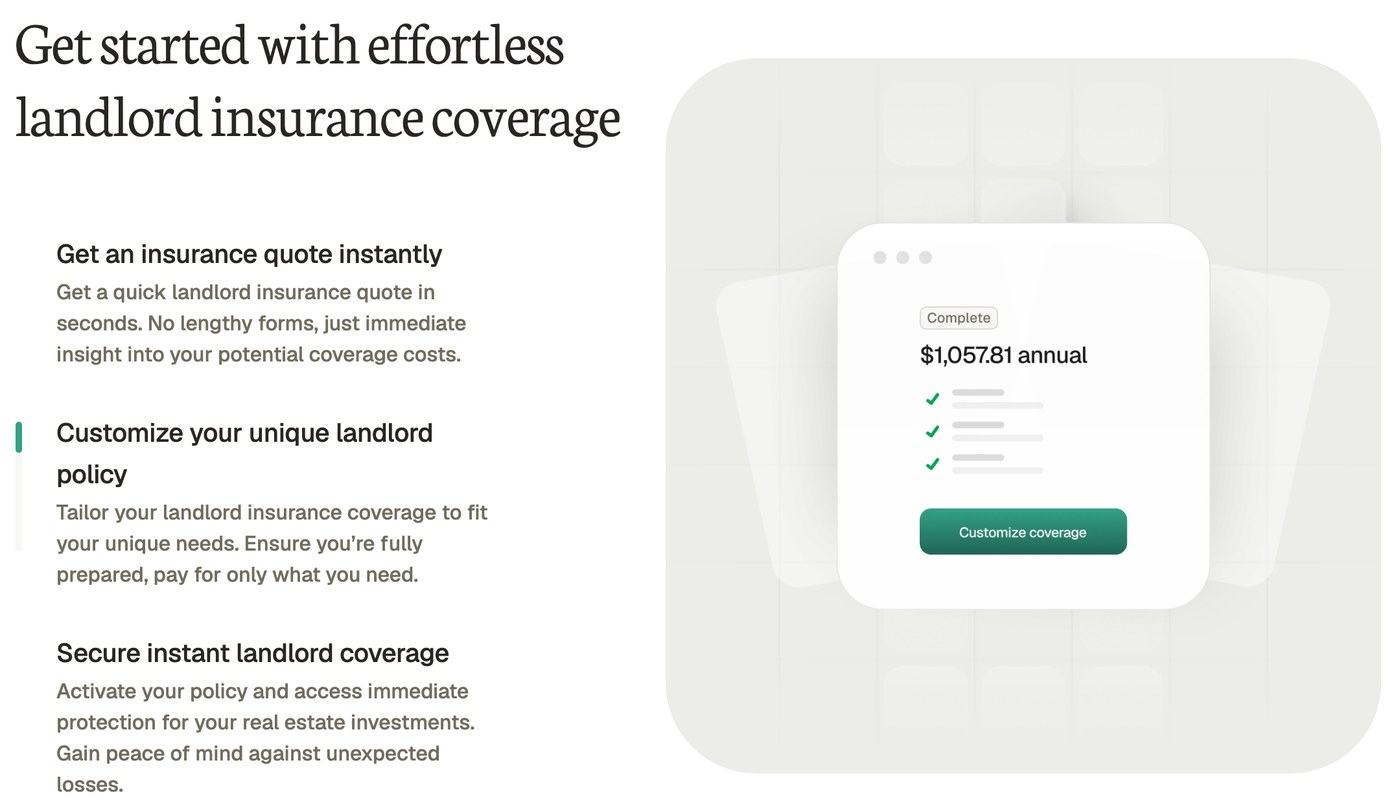 ObieData-driven insurance for landlords and real-estate investors.Better-priced risk on an input that shapes rent.
Obie provides insurance for landlords and real-estate investors. Its relevance to renter affordability is indirect but material. Much of America’s rental housing is owned by smaller operators whose margins leave little room to absorb sharp premium increases. When insurance costs rise, those increases can be reflected in rents at renewal. Better underwriting and more efficient insurance do not eliminate that dynamic, but they can affect one of the inputs that ultimately shapes rent.
 KelvinThe Cozy, an insulated smart radiator enclosure for steam-heated buildings.25.5% average heating savings, verified by NYSERDA.
Kelvin, formerly Radiator Labs, focuses on the cost of heating older steam-heated buildings. Its Cozy enclosure has been independently verified by NYSERDA at average heating savings of 25.5%. In master-metered buildings, heating costs are part of the building’s operating expense and can influence rent. Kelvin is therefore both a decarbonization and an affordability story: reducing fuel use can lower costs for owners and, where those costs flow through, help moderate the expense borne by residents.
04 · Timing
 Split PaySplits rent into two payments while the landlord is paid in full, on time.Fewer late fees; on-time rent can be reported to the bureaus.
Split Pay, from Rent App, allows a renter to divide rent into two payments while the landlord receives the full amount on time. The core problem is straightforward: rent is generally due once a month, while many households are paid weekly or biweekly. When those schedules do not align, a household that can afford the rent in aggregate can still incur late fees or credit damage. Smoothing the timing does not reduce the rent itself, but it can reduce an avoidable source of financial stress.
What We Look For
Across these categories, we look for companies that can improve one of four characteristics of a housing payment: its level, its timing, its predictability, or its long-term financial value. The first is the most obvious. The other three can be just as consequential to a household trying to stay current.
Does the benefit reach the household? Building technology can improve owner NOI without reducing a resident’s costs. The distinction matters. In master-metered buildings, Kelvin’s fuel savings can affect the costs that feed into rent. In other settings, efficiency gains may remain with the owner. A company should be clear about which outcome it creates.
Does it lower the payment, or make it more predictable? Both matter. A household may be able to carry a $2,100 monthly payment yet be unable to absorb a single $4,300 month. Capped increases, better risk pricing, and payment smoothing can reduce that volatility.
Can the model work within the current operating environment? Policy change can be valuable and sometimes necessary. But when we evaluate a company, we need to understand whether the model can serve customers before a particular legislative outcome arrives.
Supply Still Sets the Long-Term Direction
None of the companies discussed here substitutes for building more housing. The supply shortfall is real: 11 million extremely low income renter households compete for 3.8 million affordable and available homes. Land-use constraints, permitting, and construction costs remain central to that gap. That is why we also invest in construction technology, from robotics to design and delivery software that can reduce the time and cost required to deliver new homes.
The difference is one of horizon. New supply changes the market over years. A household’s payment is set each month by a combination of price, financing, insurance, energy, taxes, maintenance, and timing.
MetaProp has invested in the built world since 2015, across more than 175 companies. Over that time, we have seen that meaningful value for households can come from lowering a cost, reducing volatility, or making a payment better match the way people earn and manage money. We see particular room to build in the operating layer, where costs have risen sharply and the connection between technology and household affordability is still underexplored.
If you are building a company that improves one of these layers, we would like to hear from you.
Building here? Pitch us.