
Fraser Patterson
Founder and CEO, Skillit
Fraser Patterson joins Zach Aarons to discuss Skillit, construction hiring and the path from apprentice carpenter to founder.
Between Zak and Aaron, with Zach Aarons is a talk show about tech, venture capital, and the people building companies that change how the world works: their early jobs, expensive lessons, and unexpected detours. And yes, MetaProp’s partners really are named Zak, Aaron, and Zach Aarons.
In this conversation
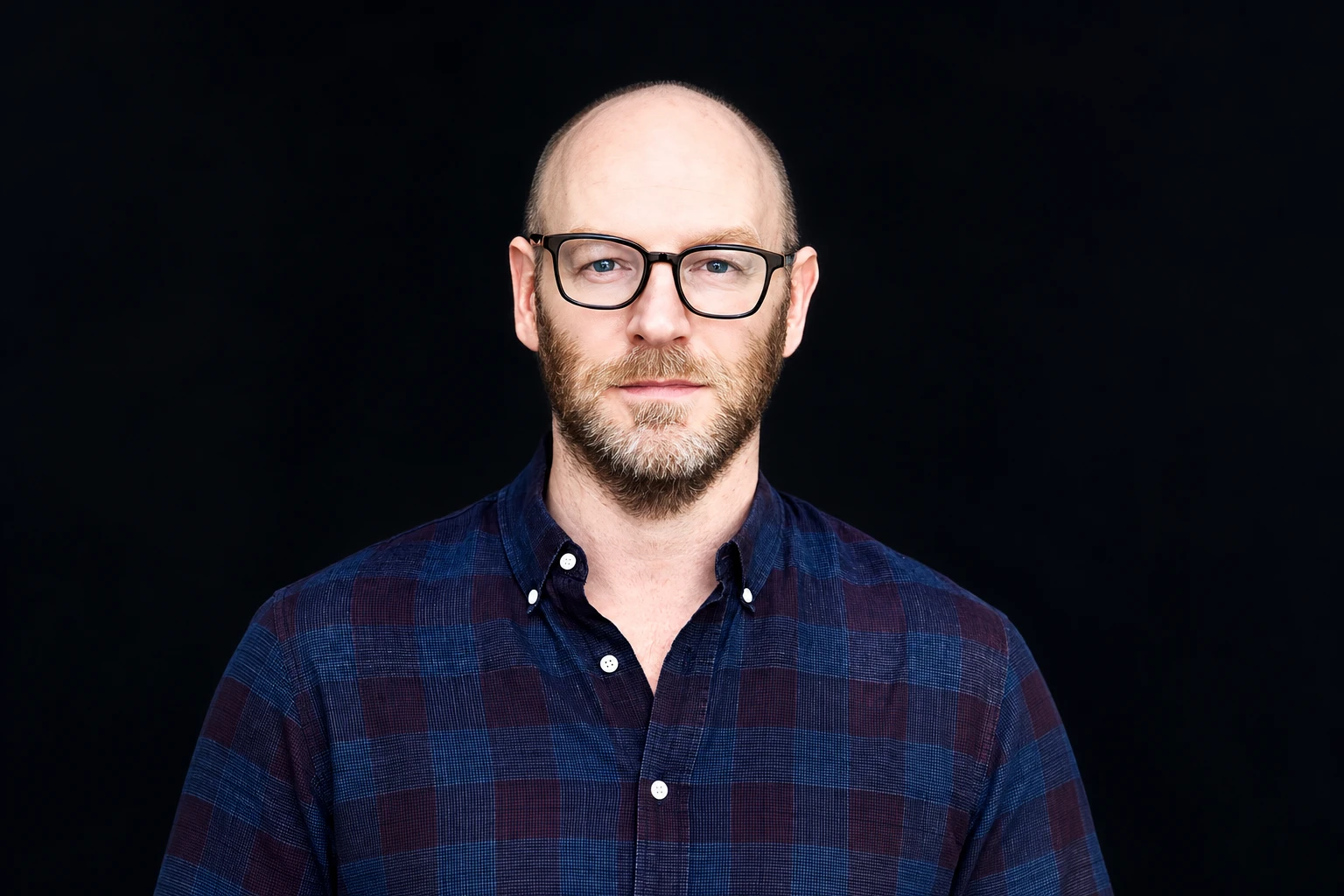
Episode 2 guest Fraser Patterson is the Founder and CEO of Skillit, construction's first AI-powered hiring platform, built on the largest vetted network of craft workers in the United States and used by builders including Mortenson, DPR, and Kiewit. Before Skillit, he apprenticed as a carpenter in Edinburgh, built core steel on London high-rises, ran renovation projects as a general contractor, and founded OnisVida in Mexico City and Bolster in New York.
Transcript
What Skillit is building0:00
Zach Aarons
Welcome to The Weakest Link. Just kidding. This is Between Zak and Aaron, with Zach Aarons. Our guest is Fraser Patterson, founder and CEO of Skillit.
Fraser Patterson
Thank you for having me.
Zach Aarons
You have one of the most interesting backgrounds in the MetaProp portfolio. Before we get into that, what is Skillit, and what is its mission?
Fraser Patterson
Skillit is an AI-powered hiring platform for construction. The mission is bold but simple: fix the skilled labor crisis.
These are important jobs, but historically they have been difficult to discover. Workers cannot easily see where the best opportunities are or how to get to them. We think the shortage starts with an access problem. If you can connect employers with workers, you can begin to address the shortage itself.
Our technology helps companies such as Mortenson, DPR and Kiewit source and connect with craft workers at a speed and scale that was not previously possible. It sits on a vetted network of workers across the United States.
In the AI era, I think these will be some of the more resilient jobs over the next decade or two. We are already seeing workers move into jobs with better pay and more room to grow.
Zach Aarons
How many workers are in that market?
Fraser Patterson
In the United States, there are roughly eight million field and craft workers. About six and a half million are in roles such as laborer, carpenter, electrician, plumber, equipment operator and pipe layer. Another million and a half are in field administration, including superintendents, project managers and estimators.
We have about 220,000 workers on the platform today, roughly five times where we were twelve months ago. Our goal is to reach a million by the end of this year and two million by the end of next year.
Zach Aarons
AI is helping hire the people who build AI infrastructure. Do we have enough workers for the data centers and other projects being planned, or do we need to bring more people into the trades?
Fraser Patterson
Both. Data center construction is growing at an extraordinary rate. But there is something unusual about the labor problem: construction reports enormous pain even though its shortage, as a share of the workforce, is smaller than the shortages in several other industries.
We think that is because nobody has digitized this workforce. The workers are effectively invisible to employers. Having one in twenty missing can feel more like having one in three missing when you cannot find the people who are there.
Start with access to the workers already in the industry. If the largest contractors can find people across the national labor pool and connect them to these projects, we believe much of the labor needed is already there. The missing piece is the infrastructure that makes those connections possible.
Growing up in Scotland7:45
Zach Aarons
What was it like growing up in Edinburgh when Trainspotting came out and the city was such a cultural center?
Fraser Patterson
There were two main music scenes: rave and rock. I was more into rave. Then Yo! MTV Raps came along, and I got deeply into hip-hop. It was a great era for it: Snoop, Eazy-E, Dr. Dre.
Trainspotting captured something real about that time. There was poverty and a lot of heroin, but also a deeply artistic, curious culture, with coffee houses and people going out. A small group of my friends became obsessed with hip-hop. I look back fondly on growing up there.
Zach Aarons
Which artist do you turn to when things are not going well, or when an annoying venture capitalist calls you?
Fraser Patterson
Nas. I still think “Represent” on Illmatic is one of the best songs ever made. Every track on that album is a banger.
Zach Aarons
Illmatic is my number-one hip-hop album. He had an extraordinary group of producers: Pete Rock, DJ Premier, Q-Tip, Large Professor.
Fraser Patterson
How did he get that kind of talent together?
Zach Aarons
He had built a reputation before the album. Main Source featured him on “Live at the Barbeque,” and people heard that verse and wanted to know who he was. Some of those producers already knew him, but the buzz made others want to work with him too.
He is still putting out music, and he has also made venture investments.
Fraser Patterson
This is what happens when you have a venture capitalist on your cap table.
Zach Aarons
Before that, you went to a boarding school on Loch Ness. What was that experience like?
Fraser Patterson
I wanted to be a professional footballer. I was a goalkeeper and had been training with Celtic and Rangers. Then my dad left home, my mother died, and I was sent to boarding school. I was angry because it meant leaving football behind.
It was Fort Augustus Abbey School, on Loch Ness. There were Benedictine monks, a working church and a military element. I arrived in a police car after getting into trouble at an arcade. It was about the worst first impression you could make.
I was there for four years. It was very strict, with physical punishments that were accepted at the time. I would tell my family I was not enjoying it. I did get a strong education, and some of the military training was fascinating, but it was an unusual place.
I was also a portrait artist. I became so absorbed in painting the school mural that I stopped going to my other classes for months. Eventually, they asked me to leave.
The first time I watched Harry Potter, I thought, “They filmed that in my school.” They had not, but the architecture, the cloisters, the uniforms and the whole setting looked that familiar.
Learning a trade17:27
Zach Aarons
How did you find your way into a carpentry apprenticeship?
Fraser Patterson
My dad was a quantity surveyor. I grew up following him around job sites, holding the other end of a tape measure. I always liked building things. He suggested I speak to two brothers who ran a carpentry company, and I became an apprentice.
I alternated between a week on site and a week at Telford College in Edinburgh. At college, I learned technical drawing and the theory. On site, I learned how different the actual work could be. Much of what I was being taught did not translate.
That experience still shapes how I think about training. A trade school has a fixed environment and fixed tools, while job sites and the skills required can change quickly. How do you keep the curriculum connected to what people need to do at work?
As Skillit sees more hiring demand, we can point that information upstream to schools: these are the skills employers need, these are the jobs available, and this is what people can earn. Training should respond to demand rather than remain static.
The industry has improved, but apprenticeships could be rough when I started. Once, while I was wearing a denim jacket and jeans, coworkers used a Hilti gun to attach me to a wall. That gives you an idea of the environment.
Zach Aarons
Have you pitched Hilti Ventures? You have used the product. Not necessarily as intended.
Fraser Patterson
It does demonstrate the product’s versatility.
Zach Aarons
How did you move from the apprenticeship into working for yourself?
Fraser Patterson
I completed as much technical college and apprenticeship work as I could, then worked with mill shops in London. I also did high-rise steelwork around Canary Wharf. Walking beams was risky, and I decided it was not a long-term career for me.
I returned to carpentry and became interested in general contracting. Carpenters touch so many parts of a building that the trade gives you a view of construction as a whole.
For a while, I also went door to door telling people their homes were subject to compulsory purchase for the regeneration around the Olympics. It paid well, but I felt uncomfortable doing it. Once I learned that people could challenge it, I started explaining those rights too.
One conversation led me to think about older people living alone and selling their homes to fund care. I had an idea that was almost the Golden Girls meets Facebook: people with similar care needs could live together in an adapted house and rent out their other homes rather than sell them.
The idea attracted some interest in government, and I presented it at the House of Lords. It was wildly ambitious. I had no idea how to get something like that off the ground. But adapting the homes created renovation work, and that helped me become a general contractor.
I became fascinated with improving construction: understanding the client’s experience, the design process and how to make the work more efficient.
Mathematics, software and craftsmanship24:25
Zach Aarons
You also developed a serious interest in mathematics and computers. Where did that come from?
Fraser Patterson
I had a great maths teacher at boarding school and became absorbed in number theory. I spent about a year teaching myself more advanced material. I developed what I thought was a proof and sent it to a friend’s father at Heriot-Watt University. He passed it to someone at King’s College, who invited me in.
I remember someone there wearing a shirt that said mathematicians were machines for turning coffee into theorems. I thought I might get along with these people.
Because I was largely self-taught, my notation needed work. They gave me a problem to think about, and I made enough progress that they invited me to do more maths with them. I did for a while, but construction kept pulling me back.
Mathematics influenced how I approach problems. It gives you a way to reason from first principles instead of relying on analogies.
That also affects how I think about software. We chose Rails at Skillit partly because the people drawn to it remind me of craftspeople and mathematicians. They care about how elegant the code is and how good it feels to work with, not just how much they can produce.
People questioned whether that would make hiring harder. But if you are a craftsman building a company around skilled work, that approach attracts engineers who care about craft too. That is how we recruited much of our team.
Building companies in Mexico and New York27:41
Zach Aarons
You then moved to Mexico and started OnisVida. How did that happen?
Fraser Patterson
My wife’s mother had cancer, so we went to Mexico to be near her. We were also having our first child. I was not supposed to start another company because I tend to become completely absorbed in whatever I am building.
I began teaching an entrepreneurship class at Centro, a design university. I asked the students to pitch ideas, selected ten, and had those founders recruit teams from the rest of the class. Then we worked through how to take an idea to market. Three received funding, and one became a real business.
Through that work, I met Fernando Fabre, who ran Endeavor Mexico. He told me about a renovation-credit program from Infonavit. The challenge was making sure the money was used for renovations and that the contractors actually delivered the work.
We put together a system in which the money sat in a trust with HSBC rather than being handed directly to the homeowner. A performance bond covered the contractor’s obligation to complete a standardized contract. Our software turned an estimate into a scope of work, and the homeowner approved completed items so funds could be released.
It was a way to give both sides confidence: the homeowner would pay for completed work, and the contractor would deliver what had been agreed.
The company grew quickly. But there were also safety concerns. At one point, someone called claiming to have kidnapped my child. I knew it could not be true because she was in the next room. Experiences like that contributed to my wanting to move my family to New York and bring the core idea here.
Zach Aarons
That became Bolster?
Fraser Patterson
Yes. Over time, we realized we could guarantee renovation work through our own process of continuous improvement, without the same bank-and-insurer structure. Bolster focused on high-end renovation, was acquired and received capital to grow.
As work came in, the main challenge became finding highly skilled workers. I started asking whether you could assess a carpenter’s knowledge on the phone before getting them onto a site.
When I was younger, you could turn up at a mill shop, work on a window sash for an hour, and the employer could see whether you knew what you were doing. You cannot casually put someone to work like that now without an employment arrangement. There is too much liability.
I would ask questions that someone who had done the work would understand. For example, why are the actual dimensions of a two-by-four different from its name? The explanation tells you more than whether someone can repeat a measurement.
At the same time, when I found a good carpenter and asked whether they had friends, more good workers appeared. That suggested the problem was not simply that skilled people did not exist. Their skills and preferences had never been recorded in a way employers could search.
LinkedIn was built around people with résumés sitting at computers. That is different from someone spending the day in the field. We needed a different way to bring workers online.
I talked with other general contractors, including much larger firms, and heard the same thing: they could not find the electricians, plumbers and other skilled workers they needed. That was the problem I wanted to spend the next decade solving.
Zach Aarons
I was initially skeptical about using knowledge as an indicator of skill. How do you distinguish knowing about something from being able to do it?
Fraser Patterson
Knowledge is a leading indicator, not absolute confirmation. You combine it with other signals, including work history and the kind of projects someone has completed.
Six years building sheds with a family member is different from progressing through defined roles at a large contractor on specific projects. As we build out the platform, those signals make the assessment stronger. That accumulated understanding is part of what makes the business difficult to copy.
Zach Aarons
You cannot just vibe-code a labor marketplace.
Bringing more people into the trades37:43
Zach Aarons
You have said your exit strategy for Skillit is death.
Fraser Patterson
My death. Not the company’s death.
Zach Aarons
What does the company look like in twenty years?
Fraser Patterson
We think about it in three acts. First, solve access: bring workers online, organize their skills and preferences, and help them reach good jobs.
Second, use what we learn from hiring activity. We can see where work is happening, which skills employers need, what those jobs pay and how someone can progress. That demand data can help schools and training programs bring more people into the trades.
The path from entry-level worker to productive craft worker is unnecessarily difficult. You need tools and transport, and you may be working in extreme heat or cold. Across the street, there could be a retail job that pays you immediately in a comfortable environment. Trade earnings can grow quickly over the first four years, but you have to make it through the early period.
The route is fragile too. If an apprenticeship closes or one manager makes the experience unworkable, that can end someone’s career in the trade. We bring people into training and then lose too many of them before they finish.
At scale, we could help route people into jobs and training continuously. We could also improve the early economics so they can stay long enough to reach their earning potential. Our analysis suggests that better completion rates could make a substantial difference to the shortage.
Third, take what works in construction into other physical industries. Construction is an especially difficult coordination problem because the workers move, their skills are not always documented, and each new project is in a different place. Solving it could give us a foundation for manufacturing, utilities, facilities and other industries around the world.
Where robots fit on the job site42:29
Zach Aarons
Another investor asked what happens to Skillit when everything is a robot. My response was that someone still has to evaluate which machine is right for a job and whether it can get there. How far away do you think robots are from doing complex carpentry?
Fraser Patterson
Ten to twenty years, in my view. I think they would need to be humanoid to navigate the changing terrain of a job site and get to the work.
Autonomous driving shows how difficult these problems are, even in a relatively standardized environment. Construction adds challenges around hands, terrain, safety and the economics of putting machines to work. Safety is part of a contractor’s reputation. You cannot treat a serious accident as a minor setback.
I think it will happen, but I expect the timelines to be longer than many people assume. I also question whether making one task faster automatically improves the whole project. Many construction delays come from sequencing and handoffs between trades.
Zach Aarons
You do not want to install the drywall before doing the plumbing.
Fraser Patterson
Exactly. The question is not only how fast a robot can screw in drywall. It is what happens before and after that task.
If robots do improve productivity, construction could become more affordable and demand could grow. We might then need more skilled people working with the machines, not fewer workers overall.
Zach Aarons
I think people underestimate the period of remote operation and partial autonomy between all-human work and fully autonomous robots. I have already seen it in construction. I sat in a recreated crane cab in New York and controlled a crane in Tel Aviv.
It may look more like robotic surgery, where a person remains involved, than a sudden switch to total autonomy. And even with autonomous machines, there will still be different hardware, software and capabilities to evaluate for each job.
Frasier, family and the ideal investor47:09
Zach Aarons
You told me you are a huge fan of Frasier. What does the show mean to you?
Fraser Patterson
After boarding school, I was homeless for about eight months. On Friday nights, I watched Frasier at a friend’s house. It was a respite from the streets.
The family dynamic meant a lot to me because I was missing that in my own life. I also loved that the writers did not patronize the audience. The jokes and references could be sophisticated, and they did not dumb them down. It anchored me, and I kept watching.
I once met Kelsey Grammer in a wine shop in Chelsea. We reached for the same bottle. I told him the show had had a huge impact on me. I did not tell him my name was Fraser because I thought that might sound too strange.
Zach Aarons
Does it still hold up?
Fraser Patterson
It does. There is something heartwarming about it, and that nostalgia has stayed with me.
Zach Aarons
If you could choose Frasier or Niles Crane as the lead investor in your Series A, who would it be?
Fraser Patterson
Niles. There is an episode about which brother has the higher IQ. I think Niles has more firepower upstairs.
Zach Aarons
I would want Lilith as a mentor.
Fraser Patterson
You did not give me that option. I like Lilith a lot. Bebe Neuwirth is great, and the interplay between her and Frasier is brilliant. But I would still pick Niles.
Zach Aarons
Thank you to Fraser Patterson. Not Frasier Crane, Fraser Patterson. The company is Skillit. We will see you next time.
More episodes
Podcast: How Soraya Darabi finds opportunity before it becomes obvious
Co-Founder and Managing Partner, TMV
Watch episode