
Soraya Darabi
Co-Founder and Managing Partner, TMV
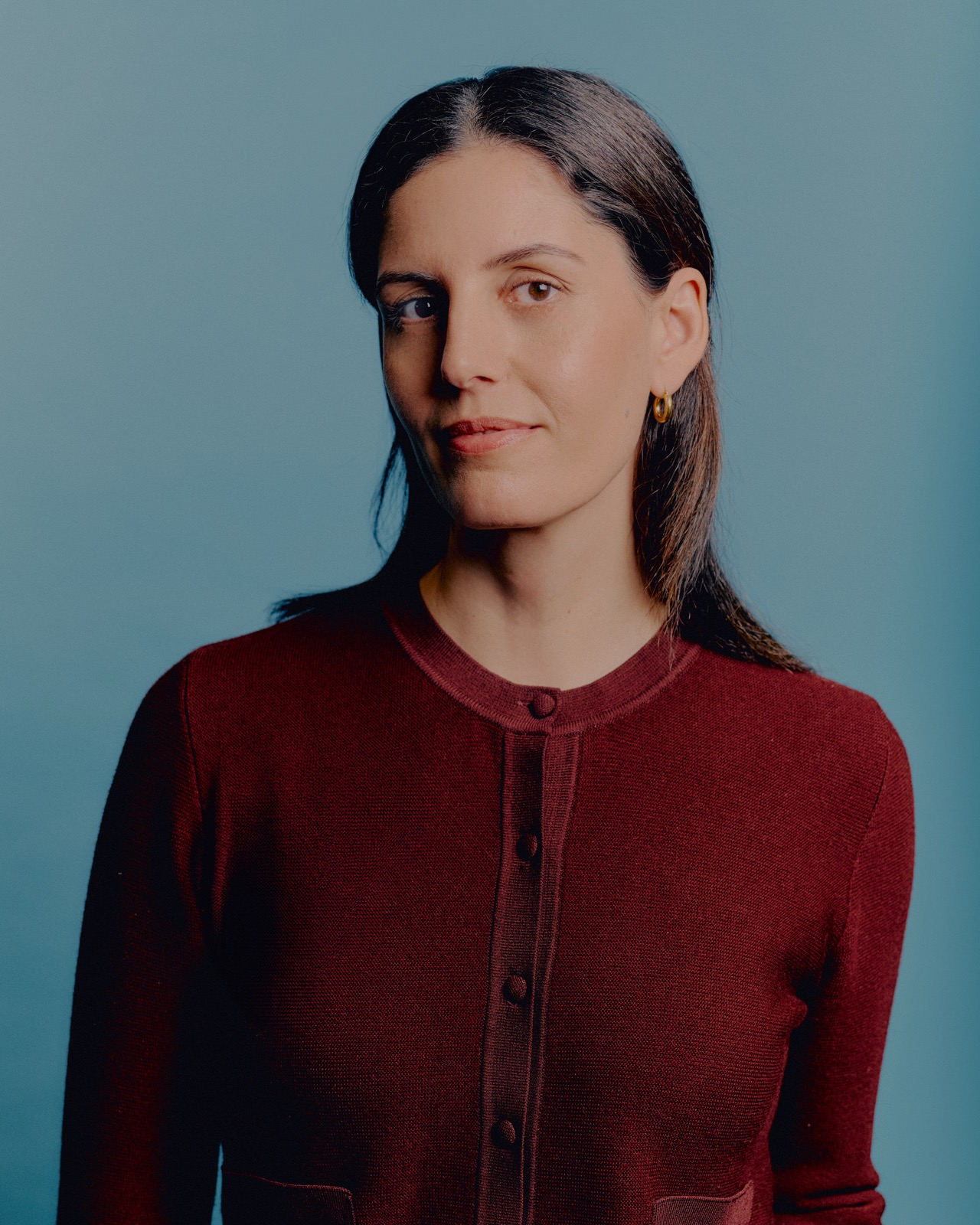
Soraya Darabi went from the front seat of her father's yellow cab, to The New York Times at 23, to co-founding Foodspotting, to building TMV.
Between Zak and Aaron, with Zach Aarons is a talk show about tech, venture capital, and the people building companies that change how the world works: their early jobs, expensive lessons, and unexpected detours. And yes, MetaProp’s partners really are named Zak, Aaron, and Zach Aarons.
In this conversation
Episode 1 guest Soraya Darabi is Co-Founder and Managing Partner of TMV, the early-stage New York venture firm investing in the industries that run the world: AI, healthcare, and maritime & logistics. Before TMV, she helped bring The New York Times onto social media in her early twenties, was one of roughly twenty people who ever worked at drop.io (acquired by Facebook), co-founded Foodspotting (named an App of the Year by Apple and Wired, acquired by OpenTable), and angel invested in Casper, FIGS, and Hungryroot.
Transcript
Soraya’s background0:00
Zach Aarons
Welcome to the first episode of Between Zak and Aaron. Our first guest is an old friend, a fellow native New Yorker, an entrepreneur and investor, and the co-founder of TMV: Soraya Darabi.
Soraya Darabi
It is an immense honor to be here, Zach.
Zach Aarons
What was it like growing up in New York, and how has that informed your work as a venture capitalist?
Soraya Darabi
New York has informed everything for me. I was born in 1983 at Columbia Presbyterian, where my mother was born and my daughters were born. I grew up in Morningside Heights on Riverside Drive. My mother taught at Columbia. My dad drove a yellow cab, but crucially, he owned his medallion. That was my first glimpse of entrepreneurship: buy low, sell high.
I spent a lot of time in the front seat of his cab. My father is an incredibly educated man, like many immigrants in New York. We would talk about literature and poetry, but we would also talk to the customers in the back. I was painfully shy, and he would ask me to talk to them to collect the tips. It was a game, but it became a building block for what I do now. Being comfortable talking to people in different situations is a gift.
New York was a very different city in the ’80s. I have watched it evolve, and I have evolved with it. I am very invested in its success as an ecosystem, as I know you and MetaProp are.
We also moved around for my mother’s academic career. I counted six or seven houses between childhood and college. Being exposed to different places taught me to embrace change. Starting at a new school, trying a new sport, failing at something: those experiences helped me become comfortable with many of the things I now coach founders through.
Zach Aarons
How did you find your way into media and technology?
Soraya Darabi
I went to Georgetown and interned at Sony Music and The Washington Post. At Sony, I got so many concert tickets that people in college called me “Plus One.” At the Post, I helped people understand new technologies, including things as basic as RSS. That led to a job at Condé Nast as it was building its digital division, then called CondéNet.
In my first year there, the company acquired Reddit. Seeing those young founders walk through the doors in 2006 and change a legacy media institution was inspiring. I wanted to be part of whatever they were doing. I started going to New York tech meetups, back when a meetup could mean ten people in a bar. A remarkable number of those people went on to build successful companies. Through being around them, I became an entrepreneur myself.
Finding an opening at The New York Times7:11
Zach Aarons
What drew you to the intersection of technology and media before it was obvious where that was going?
Soraya Darabi
I had always been an avid reader. English was one of my majors, and I thought I would write. I wrote my college admissions essay about wanting to be Diane Sawyer. A few years later, because of my work at The New York Times, I had lunch with her.
She barely gave me a chance to ask a question because she wanted to know everything I was learning about social media. She was such a consummate journalist. It was a lesson in how listening can lead to success.
At The Washington Post, I noticed that many of the journalists I admired were not digitally savvy. This was 2004 or 2005, so that was understandable, but it felt like an opening. A lot of entrepreneurship is noticing an opening and seeing where your skills fit. I could move beyond being the intern by asking, “Would you like me to show you how to do this?” That became my job at three media institutions.
When I joined The New York Times in 2007, I was following a pattern I had seen at the other organizations: people respected what I knew, and they were willing to try things.
Zach Aarons
That approach shows up in TMV today. You identified a niche that was not obvious and was growing quickly. You are doing that again in areas such as maritime, logistics, healthcare and automation.
I remember you telling my class at Columbia about arriving at the Times and asking to use your first name as your email address. You had the confidence to suggest something different because you understood how people were communicating online.
Soraya Darabi
I also wanted to meet the IT department, introduce myself to the engineers, and get a Mac instead of a PC. That broke the internet there.
Zach Aarons
You were also meeting the founders of companies such as Twitter. How did those relationships start?
Soraya Darabi
Some came through the Reddit founders inviting me to things. I also cold-emailed Mike Arrington at TechCrunch about the Reddit acquisition. He ran the story and later invited me to TechCrunch 50, where I became a startup judge.
At the Times, I guessed Jack and Ev’s email addresses at Twitter while it was still in beta. Jack tweeted my message and said his favorite organization was now on Twitter. I did not have the heart to tell him it was really about three of us at that point.
We called it the beta approach to learning. How could we try a new company before most people knew it existed, get comfortable with it, and then build a partnership?
There were 200 people on the digital team, each more impressive than the next. I was lucky to work with them in my early twenties. I played a small part in something that became extraordinary. What the organization accomplished afterward was not all thanks to me.
Zach Aarons
I prefer to take credit for other people’s accomplishments. Reasonable people can disagree.
Joining New York’s startup scene15:47
Zach Aarons
You went from working with startups to joining one. What was it like at drop.io, and how did that lead to Foodspotting?
Soraya Darabi
I met Sam Lessin at one of those early New York tech meetups. He stood on a stool to explain his startup because there were no microphones. I was impressed that someone my age, with the right idea and network, could raise money and build something meaningful.
He was a great recruiter. I was impressed by the people at drop.io, and many are still friends. My boss, Steve Greenwood, and I had these hilarious business adventures. Work was fun. I could bike to the office and leave my bike there. The furniture looked like it had come from Sam’s dorm room, and there was a keg in a conference room.
Coming from corporate America, that culture was incredibly appealing to a 26-year-old. I was also astonished by how quickly things got done. You would stay after work, go to events, and meet people who were building the tech community.
Zach Aarons
Foodspotting arrived when smartphones, location services and food photography were all taking off. How did you get involved?
Soraya Darabi
The founders asked me to advise them after I left the Times because I knew how to connect startups with larger media companies. I found myself getting excited about Foodspotting on nights and weekends, both as a food enthusiast and as someone interested in the combination of social, local and mobile technology.
I had used Dodgeball and then Foursquare. Back then, people in New York tech used those products to find their friends and meet in real life. When Foursquare launched its API, Foodspotting was an early partner. I thought the idea of matching photographs of food to places could become a recommendation book for the future.
I eventually joined as the New York partner. The people who conceived and built the product on the West Coast deserve the credit for seeing it through to the OpenTable acquisition. For me, it was another front-row seat to how quickly this ecosystem could move.
The product was good, but we did not have much of a business plan. We had free office space and pitched the wildest partnership we could imagine: Anthony Bourdain’s No Reservations working with an app nobody had heard of. It worked. The show ran interstitials for a whole season. I still remember the line: “Eat where Tony eats.”
Things were much more informal then.
Zach Aarons
More informal than Between Zak and Aaron?
Soraya Darabi
You are still in informality land. I miss that era. It felt less transactional, and it gave us the building blocks for what we do today.
Zach Aarons
Some of those apps did not make it. There was Yo, where you could send someone “yo” and that was the whole product. And Kevin Rose had Oink, where you could rate anything. You could pick up this cardboard cutout or that camera and rate it. The data was unwieldy, but I used it for a couple of weeks.
Soraya Darabi
That idea holds up. I still get pitches like that.
Zach Aarons
Text Kevin after this interview. Offer to buy the source code. See if you can get it done.
From angel investing to TMV25:48
Zach Aarons
How did you go from being an operator and adviser to making angel investments and starting TMV with Marina?
Soraya Darabi
Not everything in startups goes up and to the right. I learned some expensive lessons, including signing equity agreements without reading the fine print. We had far fewer resources then.
Angel investing started as a question: would a founder trade some equity for my advice? I had more advice and access to offer than capital. I was beta-testing Square back when it was called Squirrel, on an iPod Touch. I kept helping companies, and some of those people eventually became investors in our fund.
I met the Casper founders at a concert. I joked with Neil, “Do you have any women on your cap table?” I ended up sitting on their mattress with a beer, thinking it was comfortable, and became an early investor. Neil is still a close friend, and TMV is now backing his new company, Slingshot AI.
A few years later, I cold-called secondary firms to ask whether they would buy my Casper shares. I wanted to learn how to get out of an investment as well as how to get in.
Zach Aarons
That is an important lesson in early-stage venture. You do not want to miss future upside, but realizing gains matters too.
Soraya Darabi
You are juggling relationships and figuring out what makes sense as an angel versus as a fiduciary. I invested in consumer companies such as Gimlet Media and FIGS before starting TMV with Marina.
We got together for dinner and started talking about being two of the few women we knew who were investing in startups. We began sharing diligence, and that led to our first special-purpose vehicle, for FIGS.
I still remember Marina telling me to put in the memo that you could wear those scrubs in the boiler room of a ship. Her background was in maritime shipping and growth investing; mine was in early-stage technology. She could zoom out and see another application while I was zoomed in on the business in front of us.
When FIGS went public, commentators started talking about whether it could expand beyond medical apparel. That was the kind of possibility we had discussed years earlier. Investing involves looking ahead, forming a hypothesis, and later asking which evidence supported it. Better still, can you help the company create some of those opportunities?
Investing in the AI age31:52
Zach Aarons
How do your different backgrounds shape TMV’s strategy and the way you help founders?
Soraya Darabi
Media teaches you to think quickly, ask questions and connect the dots. As managing partner, my responsibilities differ from those of a partner who spends every day focused on one sector.
We have two core pillars: health and bio on one side, and maritime, logistics and port technology on the other. AI and automation run across those areas.
Our approach to helping companies has also changed. We used to offer almost everything under go-to-market: writing press releases, helping with branding, hiring. We helped recruit 40 early employees for our first unicorn. We could be effective at that work, but it was too much to do across the portfolio.
For a young company moving from seed to Series A, revenue is what really moves the needle. Our focus is now on connecting startups with large commercial partners. That was a major change for us in year five, and we have spent the following five years concentrating on commercialization.
My media background helps because so much of the work is asking the right questions, moving quickly and making introductions. Most introductions will go nowhere. The job is to find the people willing to try something new and make the most of those relationships.
We have worked with about 80 portfolio companies over ten years. We try to remember the founders, the birthdays and the new babies. It can be hard to keep track.
Zach Aarons
I do not even remember their names, let alone their children’s names.
Soraya Darabi
What matters to us is whether those founders would work with us again. We are closing a deal today with the first founder who returned capital to our first fund. Being there for the long term is the reward.
If ’90s TV characters were startup founders35:10
Zach Aarons
We grew up between Gen X and the millennials. My favorite description is the “Jordan Catalano generation,” after Jared Leto’s character in My So-Called Life. If you had to back one character from that show as an entrepreneur, who would it be?
Soraya Darabi
Why is it not the Angela Chase generation? She was the protagonist.
Zach Aarons
Misogyny.
Soraya Darabi
Rayanne Graff is my spirit animal, but I would back Brian Krakow. He is smart, he is the nerd, and he is quietly absorbing everything.
My favorite moment is discovering that Brian has written the beautiful love poetry Jordan delivers to Angela. She should have been able to figure it out.
Zach Aarons
Jordan had a song called “I Call Her Red” about his car.
Soraya Darabi
And she thought he could write an exquisite Shakespearean sonnet.
Zach Aarons
That makes me question Angela’s judgment. I think Rickie Vasquez could be a good entrepreneur. Everybody liked him. He could sell without making it feel like a sales pitch.
Soraya Darabi
I agree.
Zach Aarons
We are also in a Beverly Hills, 90210 group chat with a future guest who spends time building Claude Code bots for trivia when he should be working.
Soraya Darabi
You have not asked which 90210 character I would back.
Zach Aarons
What do you think the next question is? Who would you back?
Soraya Darabi
Rush Sanders.
Zach Aarons
Steve Sanders’ dad. Why not David Silver? He was already an entrepreneur and had his own show.
Soraya Darabi
He lost his trust fund in the Peach Pit After Dark and had to sell it to Noah Hunter.
Zach Aarons
This is why Soraya always beats me.
The Peach Pit investment committee40:16
Zach Aarons
Which is the better investment: the Peach Pit from 90210, with Nat, or the Max from Saved by the Bell?
Soraya Darabi
Both had limited seating, so there was exclusivity. Both had good-looking clientele, above-average food and California locations.
Zach Aarons
Tough permitting laws.
Soraya Darabi
If I remember correctly, people came into the Max carrying surfboards, so I think of it as beachfront property. The Peach Pit’s location is less clear. But once you include the Peach Pit After Dark and the musicians who performed there, that is the better investment. Babyface, come on.
Zach Aarons
Better musical guests should have helped the business.
Soraya Darabi
My final answer is the Peach Pit, with Nat and his catchphrases. You would have to walk in and have someone named Nat tell you, “Zach, you handle this.” It is a franchise.
Would you back Zack Morris?42:25
Zach Aarons
Let’s talk about Zack Morris, who I was named after. Saved by the Bell came out after I was born, but my parents had a premonition.
Soraya Darabi
I have a Zack story too. When I was ten, I found out I had a half-brother. I told my friends he was Zack Morris. Having a brother was true. The Zack Morris part was not.
Zach Aarons
Rewatching the show, Zack Morris was a con artist. But he was also a great salesman, and he could literally stop time. Bill Gates and Steve Jobs could not do that. Suppose he pitches you an AI automation company for healthcare workers on ships, right in the middle of TMV’s mandate. Do you invest?
Soraya Darabi
No. But I am sure Andreessen would.
Zach Aarons
Where can people find you if they want to pitch TMV or follow your work?
Soraya Darabi
Team at tmv.vc. I am on LinkedIn, and I still see messages on Twitter, although I spend less time on social media than I used to.
Zach Aarons
Thank you for coming in. I could not have asked for a more engaged and interesting first guest.
Soraya Darabi
Thank you so much.
More episodes
Podcast: How Fraser Patterson is using AI to tackle construction’s labor shortage
Founder and CEO, Skillit
Watch episode