


Spain’s Startup Opportunity in Housing and Infrastructure
Spain has built a substantial venture market. Its founders now have an opening to tackle the country’s shortage of homes and the practical challenges of building new infrastructure.


Spain added around 240,000 households in 2025 and completed roughly 92,000 new homes, according to Banco de España. The country needs to build more, especially in Madrid, Barcelona and the Mediterranean provinces where demand is concentrated.
Venture investors put about $3.5 billion into Spanish startups in 2025, according to Dealroom. We think the country’s founders have an opportunity to apply more of that capital and experience to the work of getting homes and infrastructure built.
At MetaProp, we have been active in Spain since 2017, investing in startups including WeSmartPark and Floorfy.
A growing venture market
Spain’s startup economy has grown substantially over the past decade. Madrid and Barcelona attracted more than two-thirds of the country’s venture investment in 2025. They provide established centers for fundraising and recruiting.
Larger funds are taking shape, too. In February, the European Investment Fund pledged about $360 million to Seaya Growth Tech Fund I, a Spain-based fund targeting roughly $1.2 billion. The fund has a European mandate. Reaching its target would give a Spanish investment firm substantial resources to back companies beyond their first rounds.
For founders working in real estate, the kind of capital matters as much as the amount. A developer may need to see a product work on an actual building before adopting it on the next one. A construction company may have to establish supplier relationships and prove its approach across several projects. Those businesses need investors who can stay with them through that process.
Making construction more predictable
A housing shortage is partly a problem of land, planning and finance. It is also a problem of coordinating a great deal of work. Designs have to become orders for materials, orders have to become deliveries, and deliveries have to arrive when crews are ready to install them. A change in one part of the process can force changes throughout the rest.
Barcelona-based 011h is organizing that work differently. It brings building design, standardized components, manufacturers and on-site assembly into a common system, coordinated through a digital platform. Components are designed with their production and installation in mind, so the people drawing the building and the people delivering it are working to the same plan.
The appeal is repeatability. Knowledge gained on one project can inform the next, rather than leaving every team to resolve the same construction problems again. For a developer, the promise is a more predictable route from a design to a completed building. For 011h, it is a business built around delivering the building itself.
On September 17, AXIS announced plans to invest up to approximately $14 million in 011h through Fond-ICO Crecimiento, alongside private funds. The commitment brings public and private investment behind a company taking responsibility for how housing is delivered.
There is real operational responsibility here. Manufacturers have to deliver, crews have to be scheduled and materials have to be paid for before a project is finished. An investor in this model has to understand the construction operation as well as the technology.
A building also needs power
The same attention to execution matters in infrastructure. A project can have a site and an intended use without being ready to operate. The electricity connection, equipment and construction schedule still have to come together.
In February, Spain’s grid operator, Red Eléctrica, reported substantial demand from projects that had been granted access to the transmission grid but were not yet operating. For projects that can take years to develop, permission to connect is one step: the installation still needs to be engineered, equipped and built.
For a founder, the useful questions are practical. Can a developer assess a site’s power constraints before spending months on its design? Can engineers and contractors coordinate the connection with the rest of construction? Can a building operate within the power available to it?
For the customer, the value is fewer late changes to a project and a clearer understanding of what it will take to open. That is a useful place for a technology business to start.
Existing properties offer another way in
Our Spanish portfolio shows that founders can also build around a much narrower problem in a property that already exists.
Floorfy

A prospective buyer does not need to visit every property in person to decide which ones deserve a visit. Floorfy gives real estate agents tools to create virtual tours, floor plans and listing material, and to walk customers through a property remotely.
That is particularly useful when the customer is in another city or country. The agent can show the layout and answer questions before anyone books a flight or arranges access. The value is in helping both sides make a better decision about where to spend their time.
WeSmartPark
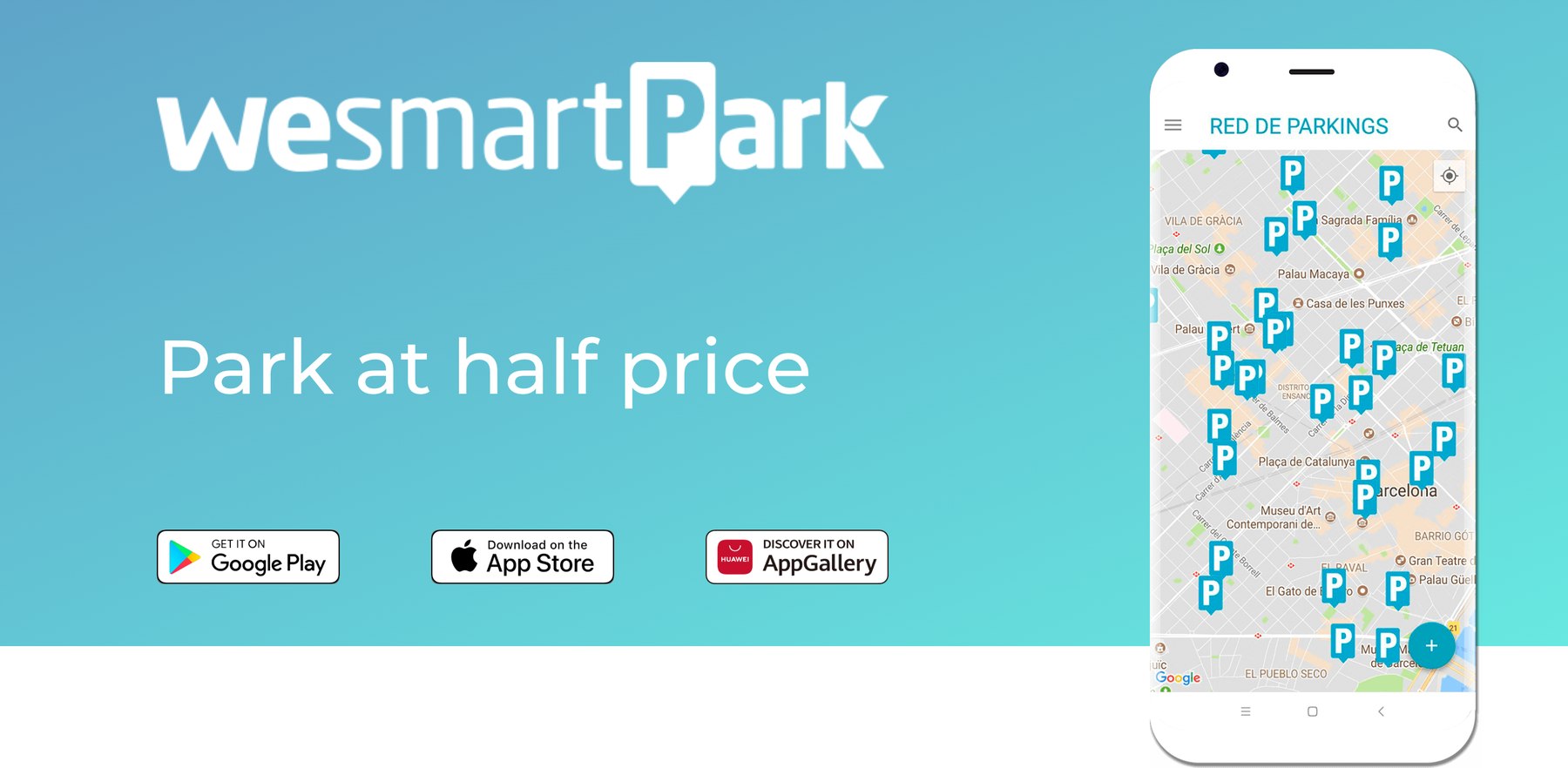
An empty parking space is not necessarily an available one. A driver needs to know it can be booked, get into the garage and pay for the time used. The owner needs to know the space will be available again when it is needed.
WeSmartPark connects those steps. It makes available hours in private parking facilities bookable, linking reservations, access and payment. The physical space is already there. The business makes it usable by another driver during hours that would otherwise go unsold.
Neither company needs to rebuild a neighborhood to improve how it works. They start with a specific task, such as qualifying a property visit or selling a few hours of parking, and make it easier to complete.
Build in Spain, with room to grow
Spain gives founders a substantial home market in which to work on these problems. It also gives them a starting point for businesses that can serve customers elsewhere. Developers in other countries need more predictable construction. Agents need to manage remote interest. Parking owners need workable ways to sell unused hours.
Crossing a border still means adapting to local building standards, suppliers and operating practices. The opportunity is to develop a method that can be repeated, while understanding where local experience remains essential.
For MetaProp, Spain’s appeal is that founders can begin with urgent problems in a market they know and build companies that matter well beyond it. We are interested in the teams making construction more reliable, helping projects secure and manage power, and finding practical new uses for existing space. Those are businesses Spain needs, and problems other countries share.
Dollar amounts are approximate U.S. dollar equivalents, using the 2025 average exchange rate for annual funding and announcement-date rates for the 2026 commitments.
Disclosure: Floorfy and WeSmartPark are MetaProp portfolio companies. Other companies are discussed as examples, not investment recommendations.